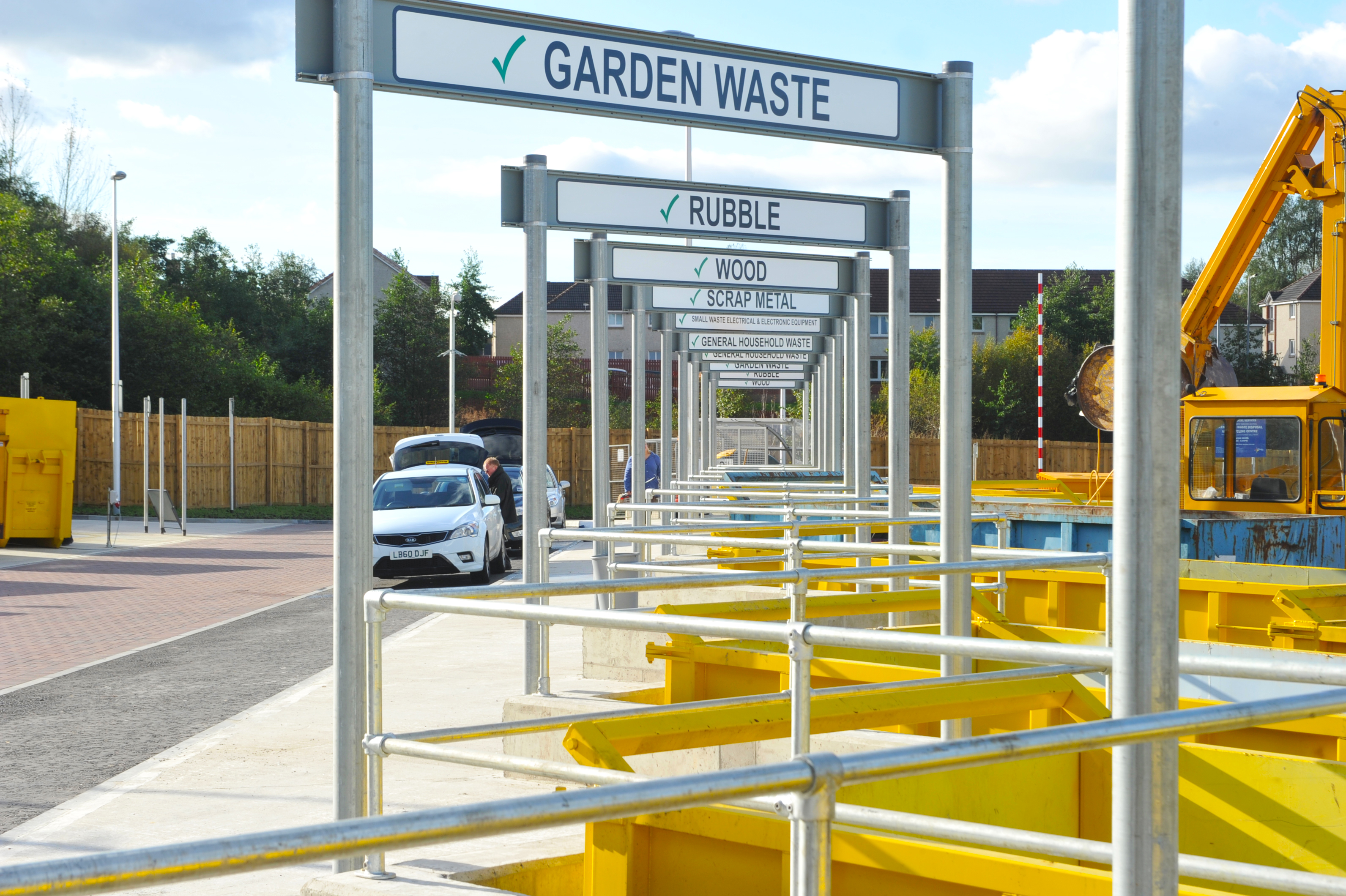
Residents disposing of items containing Persistent Organic Pollutants (POPs) must use the designated skips at three of North Lanarkshire Council’s Household Waste Recycling Centres.
The Persistent Organic Pollutants (POPs) Regulations mean all Scottish councils have to store, transport and dispose of these items separately from other waste.
POPs are toxic chemicals which don’t break down easily in the environment and pose significant risks to human health. They are found in items made from or containing leather, synthetic leather, other fabric, or foam, including sofas and armchairs, kitchen and dining room chairs, beanbags, child car seats and upholstered highchairs and benches.
The three Household Waste Recycling Centres which can accept these items are Netherton in Wishaw, Wardpark in Cumbernauld, and Stobcross Street, Coatbridge.
Items containing POPs also have to be separated from other household waste if they are disposed of using a special uplift.
Compliance with the regulations and disposal of items containing POPs has resulted in increased costs of over £950,000 to the council in 2025/26.
As a result, the council will introduce a charge of £80 for special uplifts for items containing POPs. The charge will come into effect from 1 October 2026. A points system will be introduced, allowing a number of items up to a maximum of eight points per uplift.
“Persistent Organic Pollutants cannot be recycled or sent to landfill and must be incinerated to protect the environment and impacts on the food chain,” said Councillor Helen Loughran, Convener of the Environment and Climate Change Committee.
“The council is already making significant budget savings to meet the challenges it faces, and the significant increased costs of managing the disposal of POPs mean we have to introduce a charge for special uplifts for these items. The charge has been kept to a minimum to recover the disposal costs.
“Items with POPs can continue to be disposed of free of charge at three of our Household Waste Recycling Centres.”
The charge and arrangements for disposal of POPs were agreed at the council’s Policy and Strategy Committee on 11 June.